Fez - Late Review
I wear a fez now. Fezzes are cool.

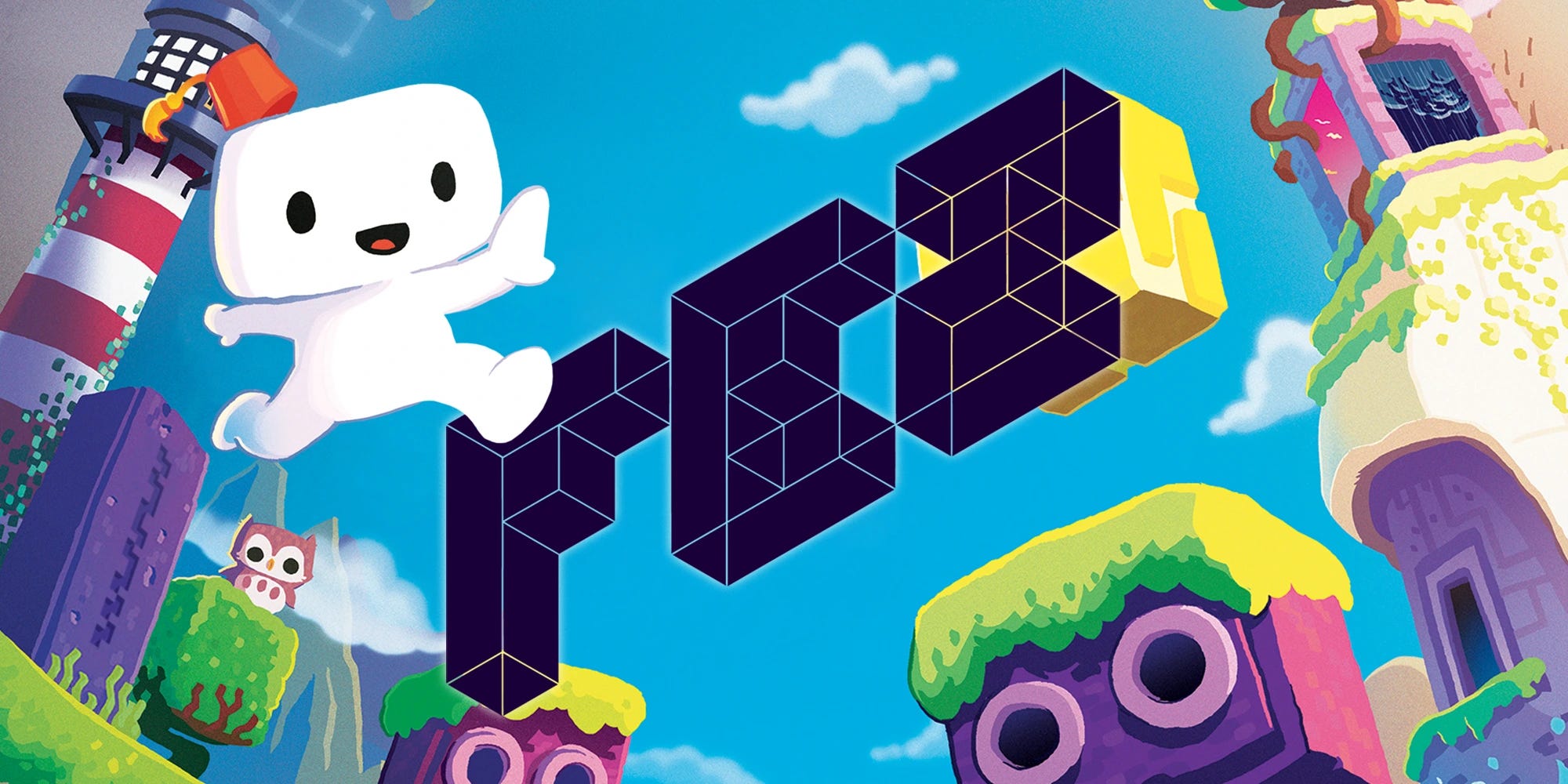
Note: this post will contain some mild spoilers about the 2012 game Fez.
What if you could see the world from a whole new perspective? Not just something you hadn’t noticed before, but an entirely new physical point of view? That’s what happens to Gomez, the playable character in the 2012 game Fez, who dons a rather jaunty fez after witnessing the breakup of his known universe to reveal something mind-bending.
The game starts like any other day in Gomez’s life. Wake up in his perfectly flat, 2D village, talk to some of the inhabitants, climb up to the top, and talk to a mysterious stranger who speaks of an adventure. At this point, Gomez witnesses something truly unique; a third dimension, and is given a new hat to wear, allowing him to rotate the world 90 degrees at a time. Unfortunately, this also seems to destabilise the entire universe, causing a funny glitching effect which makes it look like the game has locked up.
Instead, the game “reboots” and Gomez wakes up again in his village. Back to carrying on about his day, talking to the villagers, go around the corner of that building, climb up... Hang on. Go around the corner? How is that possible? It seems that beyond the usual x and y axis, a new “z axis” has appeared.
This changes everything, because now you can go around buildings and structures and realise that there is something behind the flat structure you used to know. Maybe a doorway to a new region, maybe a chest, maybe something secret. The game allows you to rotate around Gomez centrally 90 degrees at a time. In practice, this means that blocks and platforms that seemed far away at first may now appear right next to you. Or incomplete ladders suddenly become whole again. Or a dead end with no way forward suddenly produces a new path.
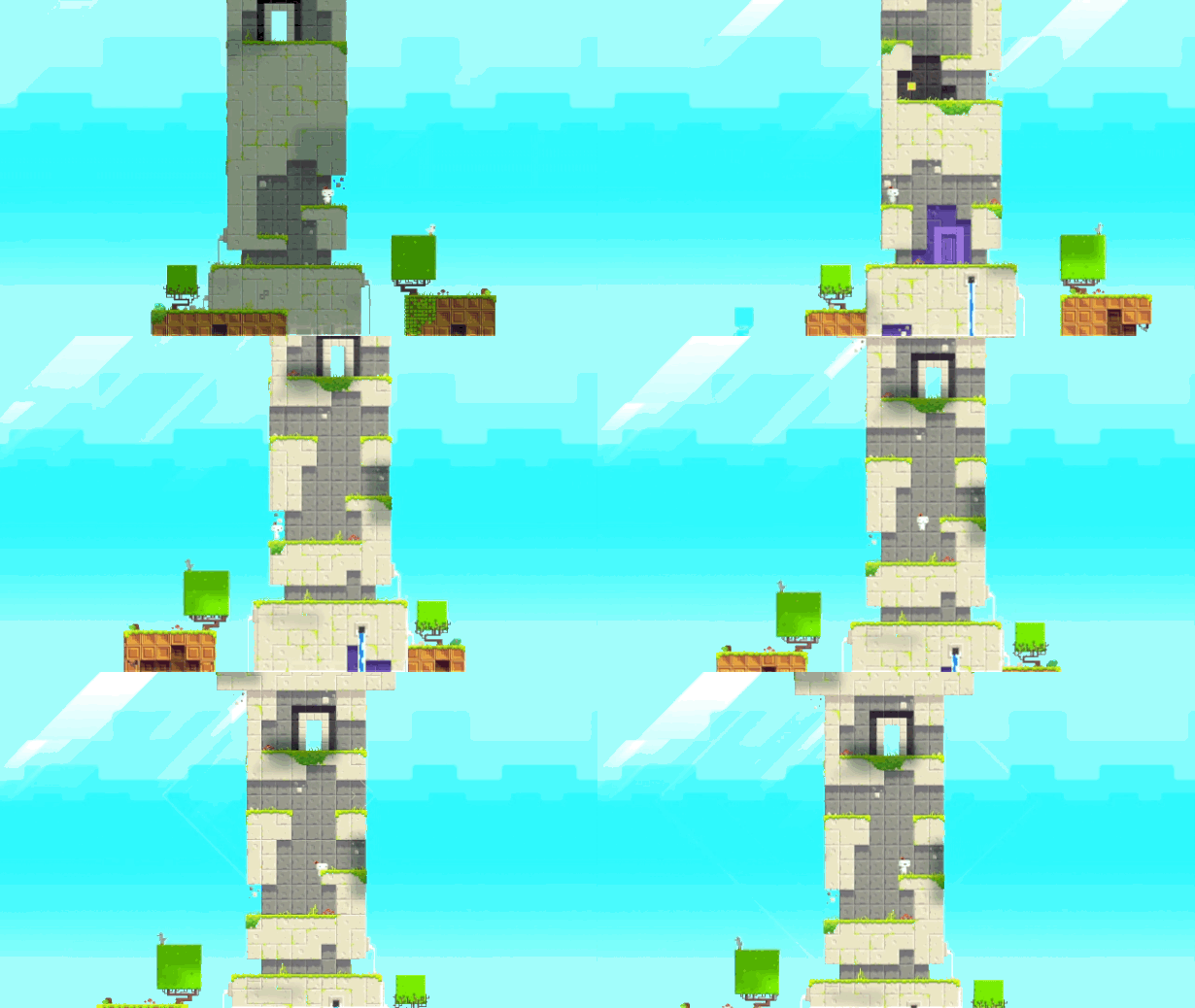
At it’s essence, there is not a lot to do in Fez. You can move, jump, rotate the world... and that’s mostly it. There are no enemies in Fez, no real sense of danger or fragility. You can’t even really die in this game; should you fall too far off a ledge, you’ll respawn immediately at the spot you last stood.
So why do I love this game so much?
Let’s start with the pacing. I played this game at a time when I was feeling a bit tired of games forcing me to progress by either winning a battle, or overcoming a dangerous obstacle, or facing a “win or fail” scenario. Most games are designed like this for a reason of course; you need a goal or objective, and some tension preventing you accomplishing it, to provide you with a sense of overcoming a challenge. This instils some pride that you faced a challenge and succeeded, and makes you feel like you could face the next challenge and beat that too.
Fez doesn’t have that, which I found refreshing from the types of games I’d normally play. It was pleasant to not face death or mortal peril over and over again. The only real obstacle to me was not progressing any further; it was therefore a very relaxing game to play.
Although, if you need something to aim for and nothing is really preventing you from achieving it, why isn’t Fez boring? Instead of action, peril or reflexes, Fez asks you to solve puzzles in the world to locate cubes. Collect enough cubes to rebuild the one you saw at the beginning of the game to rebuild it, and restore order to the universe from chaos. Finding the cubes are not always obvious though, and rely on you navigating the now new 3D world to understand it’s geometry and be aware of space - and how it can be manipulated. So part of the reason I find Fez relaxing yet I still want to be driven forward is because of the puzzle solving, and understanding the world around me in a logical fashion. It also meant I could easily jump in and out of the game whenever I felt like it. I played on the Nintendo Switch, which was perfect for me when I could sit down for maybe 20 - 30 minutes, take a leisurely stroll through a region and find a few more cubes during a session.
Another reason the game kept drawing me in was the sense of mystery it exuded. There is very little guidance included in the game besides some very basic points on the controls and initially understanding the 3D rotating mechanic. So a lot of your understanding of the game must come from you experiencing it yourself. You will encounter strange obelisks, structures which suggest a civilisation which pre-dates Gomez’s history, warp gates to new locations, and so on. You’ll also encounter a ciphered alphabet to a lost language, and the game’s equivalent of Morse code, providing sequences of button presses you can accomplish to uncover more cubes - so long as you understand the code. None of this is explained to you in the game, yet by simply observing carefully and having some patience, it is possible to discover these secrets yourself. Or, by now so many years after initial release, you could look up the answers that many other fans have carefully documented. Still, the fact that secrets are baked directly into the game is another reason I enjoyed it; the feeling of uncovering something that seemed lost but is now found also works as a game driver. It was one of the earliest games I played which required me to take some notes along the way, something I actually enjoyed doing, like an explorer noting places and points of interest.
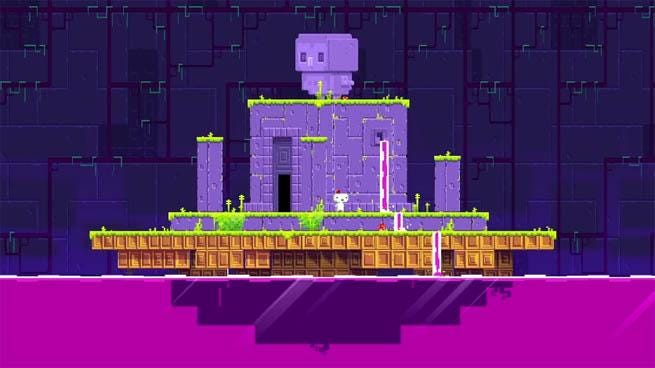
Even better, when you get to the end of the game, and assuming you found all the cubes, you realise... (sorry, minor spoilers) you’ve only completed half of the universe cube. There are just as many more to discover on a second playthrough. This time is when paying attention to the world and secrets really becomes important. Meaning you need to learn the ancient alphabet, you need to learn the ciphered instructions for sequences to find more cubes, you need to think even further outside of the box. You even get to discover secrets at a particular time of day.
And you will get to achieve that at a nice, gentle pace. With pleasing visuals harkening back to pixel art yet in 3D, and a calm, synthetic soundtrack by Disasterpiece, I just felt quite happy being drawn (slowly) into Gomez’s world. Sometimes I thought that I should maybe try and work a bit faster, my action-game instincts kicking in slightly. In the end though, I just let the game wash over me, I took my time, and I felt calm and relaxed all the time I played it.
Sometimes it’s just nice to absorb a game and wonder, literally, what’s around the corner.
Thanks for reading this shorter than usual post, about a game that is now over 10 years old. If you have any comments, add them below.
I started reading this thinking that I never played it and wanting to learn more about it. But then I saw the GIF and I was like "Did I actually play this?? It looks so familiar!". I'm still not entirely sure if I played it before, but this was a great read nonetheless!
I feel like I picked this up AGES ago but didn’t realise the depth of it. Soooo after reading this I’m going to return to it! Love a good puzzler, especially one that sounds Tunic-esque with its own language and hidden puzzles 👀